
সংবাদ শিরোনাম : Physically Disabled Student Munna Takes Fazil Examination in Rangunia, Calls Grow for Special Support
Rangunia (Chattogram) Correspondent | AdChannel24.com
Publication Date: 15 October 2026
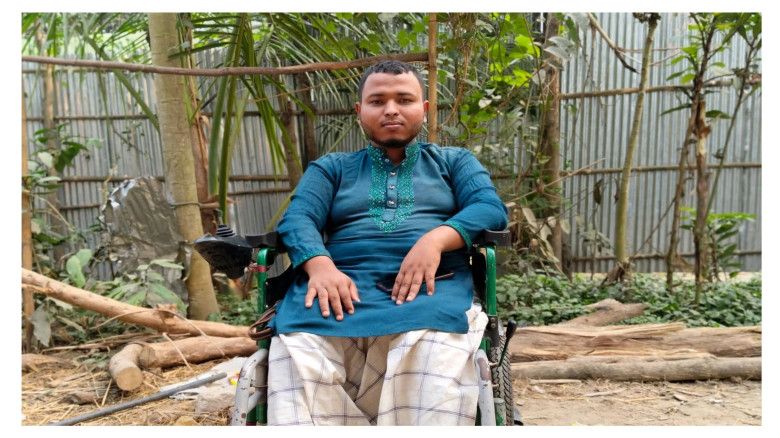
Rifat Hasan Munna, a student with severe physical disabilities from Uttar Noagaon in Pomra Union of Rangunia Upazila, Chattogram, is sitting for the first-year Fazil (Degree) examination. Despite significant physical limitations, he has continued his education, highlighting the importance of ensuring equal educational opportunities for students with disabilities.
His examination centre is Al-Shahpara Kamil Madrasa in Rangunia, where the examination began on October 15. However, Munna faces considerable challenges in entering the examination hall, moving around, and writing answers independently like other students. In these circumstances, calls have been made for appropriate assistance and special arrangements to help him participate in the examination.
Munna lives in Uttar Noagaon, Ward No. 9, under Pomra Union in Rangunia Upazila. His physical condition is so severe that he cannot move from one place to another without a battery-powered wheelchair. He also depends on his mother for many basic daily activities, including eating and personal care. His mother remains his primary source of support in managing everyday life.
According to information provided by his family, Munna's physical condition was not as severe during his early childhood as it is today. However, his physical disabilities gradually worsened amid a lack of access to advanced medical treatment. His mobility and ability to lead an independent life are now severely restricted. Despite these challenges, he has maintained his commitment to education and progressed to the first year of the Fazil programme.
Another heartbreaking aspect of Munna's life is that he is not the only person with a disability in his family. All three siblings reportedly live with severe physical disabilities that prevent them from moving around normally. As a result, meeting their daily needs and ensuring appropriate care have become significant challenges for the family.
Despite these difficulties, Munna's determination to continue his education is commendable. However, entering the examination hall, reaching his seat, writing answers to questions, and taking breaks when necessary can be considerably more difficult for him than for other candidates. Without appropriate assistance, he may face obstacles to participating in the examination because of his physical limitations.
A student's physical disability should not become an unnecessary barrier to education. Ensuring an accessible and supportive examination environment is an important responsibility of the relevant educational institutions and authorities. In Munna's case, measures such as accessible entry to the examination centre, suitable seating arrangements, and consideration of additional time or a scribe, where permitted under applicable regulations, may help address his needs. Such accommodations should be arranged in accordance with the relevant examination rules, approval procedures, and official requirements.
Concerns have been raised that adequate special arrangements may not have been made to accommodate Munna's physical condition and facilitate his participation in the examination. However, obtaining a statement from the madrasa authorities would help present a balanced account of the situation. The immediate priority should be to assess his circumstances and take effective steps to ensure that he can sit for the examination.
Munna's expectations of the madrasa where he has studied since childhood are understandably high. Taking his longstanding connection with the institution into account, appropriate initiatives to make the examination environment more accessible would represent a compassionate and responsible approach.
In this context, attention is being drawn to the Rangunia Upazila Nirbahi Officer (UNO), the relevant education officer, the madrasa authorities, and the officials responsible for administering the Fazil examination. Prompt action is needed to ensure that Munna is not denied the opportunity to sit for his examination because of his physical disabilities.
Concerned individuals have also been urged to bring his circumstances to the attention of the relevant authorities without waiting for the issue to go viral on social media. A student's educational future should not be placed at risk simply because necessary assistance is unavailable. Responsible action from the authorities and the wider community is essential.
Munna's struggle is not merely a personal battle. It also highlights the broader issues of educational rights, dignity, and equal opportunities for people with disabilities. His determination to continue studying despite severe physical limitations demonstrates that students with disabilities can make progress in their education when provided with an appropriate environment and necessary support.
What is needed now is a sincere initiative from the relevant authorities, support for the family, and practical arrangements to enable Munna to participate in his examination. The hope is that his physical limitations will not become a barrier to his education.
Contact: Rifat Hasan Munna
Mobile: +880 1830-902653